
Categories
Distressed PropertiesPublished May 6, 2026
What Will an Investor Pay for Your Distressed Property — and How Do They Figure It?

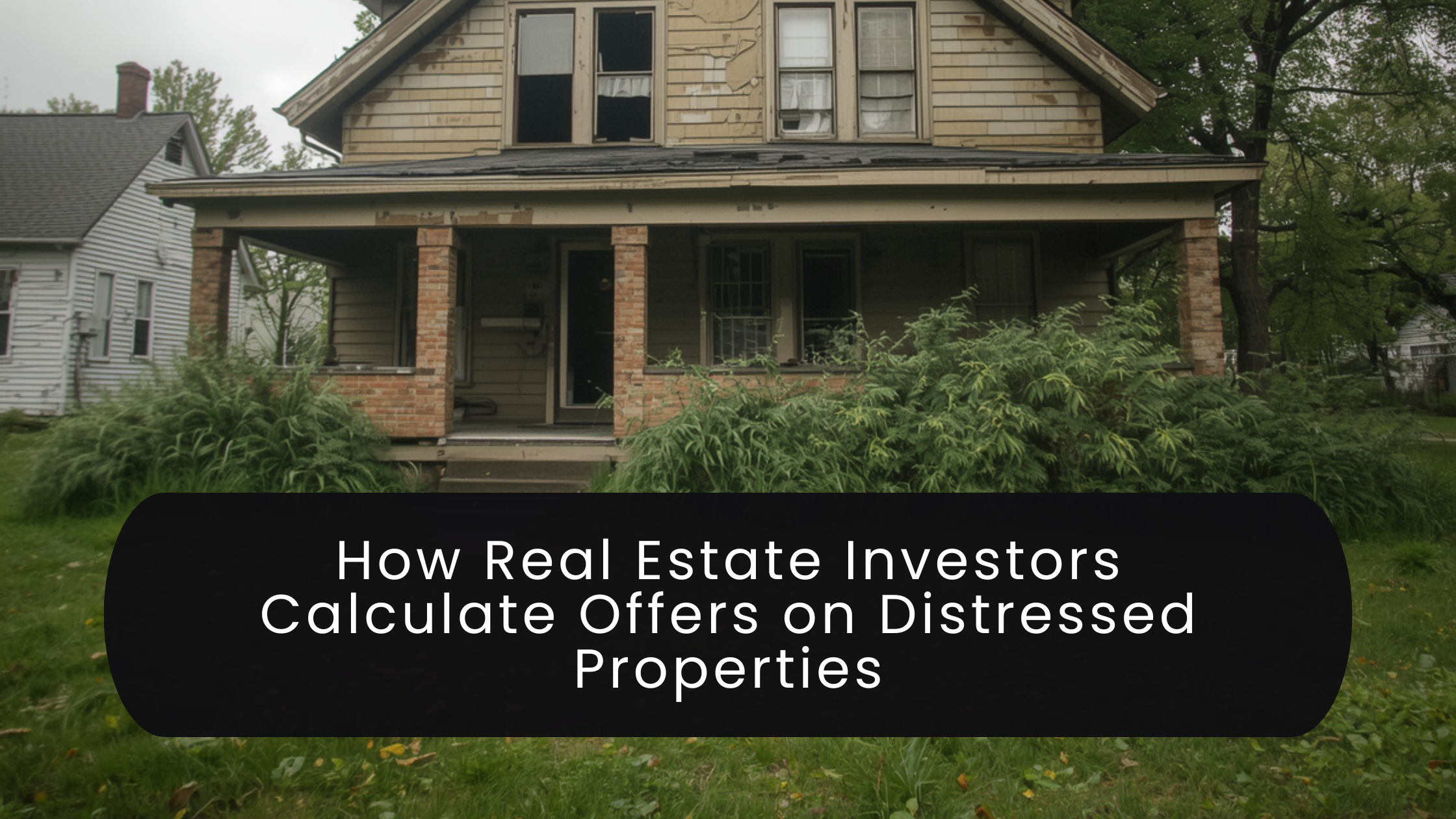
How Real Estate Investors Calculate Offers on Distressed Properties
If you own a distressed property, you may wonder why investor offers can vary so much. One investor may offer significantly more than another, while some buyers may not even be interested at all. So how do real estate investors actually determine what they can pay for a property that needs major repairs?
The answer is simpler than most people think: investors work backward from the property’s potential value after repairs are completed.
Here’s how that process usually works.
Step 1: Determine the After-Repair Value (ARV)
The first thing an investor looks at is what the property could realistically sell for once it’s fully repaired and updated. This is commonly called the “After-Repair Value,” or ARV.
To estimate this value, investors study:
- Comparable homes that recently sold nearby
- The condition and quality of those homes
- The neighborhood and market demand
- Square footage, layout, and features
- Local appreciation trends
For example, if updated homes similar to yours are selling for around $220,000, that may become the target resale value after renovations.
Step 2: Estimate Repair Costs
Next comes the most important part — figuring out what it will cost to get the home to that resale condition.
This includes:
- Roofing
- Electrical and plumbing work
- HVAC systems
- Kitchens and bathrooms
- Flooring and paint
- Structural repairs
- Cleanup and debris removal
- Permits and inspections
Some investors do part of the work themselves or have in-house crews, which can reduce costs. Others hire licensed contractors for nearly everything. Because of this, repair estimates can vary greatly from one investor to another.
An investor with lower labor costs may be able to pay more for the property than someone outsourcing every step.
Step 3: Factor in Holding Costs
Many sellers don’t realize that investors continue paying expenses while the property is being renovated and marketed.
These costs can include:
- Property taxes
- Insurance
- Utilities
- Lawn and maintenance expenses
- Loan interest or hard money financing
- Closing costs
- Realtor commissions when reselling
The longer a project takes, the more these expenses add up. A six-month renovation and resale timeline can cost thousands of dollars even before profit is considered.
Step 4: Account for Risk and Profit
Every investment carries risk.
Unexpected repairs, changing market conditions, permit delays, contractor issues, or slower resale activity can all impact profitability. Because of this, investors build in a margin for both risk and profit.
This doesn’t mean investors are trying to “steal” properties. It simply means they must leave enough room in the numbers for the project to make financial sense.
Different investors operate differently:
- Some are comfortable making smaller profits if they can do work themselves
- Some flip properties quickly at higher volume
- Some keep properties as rentals and can pay more because they’re focused on long-term income
- Others may need larger margins due to financing costs or business overhead
That’s why two investors may give completely different offers on the same house.
Why This Matters for Sellers
Understanding how investors calculate offers can help sellers make more informed decisions.
A distressed property usually cannot be valued the same way as a move-in-ready home. The repairs, time, costs, and risks all affect what an investor can realistically pay.
Many distressed property owners feel frustrated when they compare investor offers to the prices of fully renovated homes nearby. However, those homes often required significant renovation costs, months of work, and substantial financial risk to reach that condition. Understanding the process can help sellers avoid unrealistic expectations while also helping them recognize when an offer is fair — and when it may not be.
However, selling to an investor can also provide benefits:
- No repairs needed
- Faster closing timelines
- Avoiding realtor commissions
- Selling “as-is”
- Flexible closing options
- Relief from problem properties or inherited homes
For many sellers, convenience and certainty are just as important as the final sale price.
Summing It Up
At the end of the day, an investor’s offer is based on a combination of:
- What the property could be worth after repairs
- The cost to renovate it
- The expenses involved during the project
- The risk and profit needed to make the deal worthwhile
The cleaner the numbers work, the more an investor may be able to pay.
If you’re considering selling a distressed property, it’s important to understand that you may have several different options available to you depending on the condition of the home, your timeline, your financial goals, and how much involvement you want in the process. In some cases, selling directly to an investor may make the most sense. In other situations, making certain repairs and listing the property on the open market could potentially result in a higher net return.
Important note: As a licensed Realtor, I have a fiduciary responsibility to help sellers understand all of their available options — not just one path. That means helping you evaluate the pros and cons of selling as-is, making improvements before listing, selling to an investor, or exploring traditional market exposure so you can make the decision that best fits your situation.
Every property and seller situation is different, and having honest guidance from someone who understands both the investment side and the retail market can help you make a more informed decision with confidence.
or another way